Bring Two Looks: Engagement Photo Outfits for Copenhagen Couples
Choose a shared palette of two or three tones, bring two complete looks (one dressy, one casual), and prioritize fit and movement over anything trendy. That single decision solves most of what makes engagement photos look staged instead of real. Test both outfits at home before the session, and let your location, not Pinterest, decide your fabric weight.
TL;DR:
- Choosing a neutral anchor color with two accent tones creates a cohesive and versatile outfit palette that photographs well.
- Wearing textured fabrics like knit, linen, or suede adds depth and interest, while busy patterns should be limited to one per couple.
- Planning outfits two to three weeks in advance allows time for adjustments, and testing comfort by moving and hugging at home prevents distractions on camera.
- For outdoor sessions, fabric and color choices should match the setting, favoring breathable, natural materials for summer and textured layers for fall.
- Couples should prioritize comfort and fit over current trends, with at least one casual and one dressy outfit, to achieve natural and relaxed photos.
Table of Contents
- Engagement Photo Outfits: A Ranked List of Dos and Don’ts
- Matching Fabrics and Colors to Your Season and Location
- How to Coordinate Two People Into One Cohesive Frame
- Your Timeline From Three Weeks Out to Session Day
- Small Styling Choices That Change the Whole Photo
- What Savvy at Shutter Optique Actually Does for Outfits
- What Most Outfit Advice Gets Backward
- Book a Guided Couples Session in Copenhagen
- Sources
- FAQ
Engagement Photo Outfits: A Ranked List of Dos and Don’ts
Getting engagement photo outfits right is less about finding the “perfect” pieces and more about avoiding a handful of predictable mistakes. Here’s the order of priority, from most to least important.
- Coordinate, don’t match. Pick two or three complementary tones with one neutral anchor, like cream, sage, and camel. Twinning in identical shades reads flat on camera and dates the photos fast.
- Bring two looks. Most photographers recommend one dressy outfit and one casual outfit per session, which gives your gallery real variety without turning the shoot into a fashion show. A third outfit is usually only worth it for longer sessions.
- Favor soft neutrals and muted tones. Cream, oatmeal, dusty blue, terracotta, and charcoal photograph better than neon or fluorescent shades because they keep the focus on your faces, not your clothes, according to guidance from Bliss & Bone.
- One pattern per frame, max. If one partner wears a print, the other stays in solids.
- Fit and movement beat trends. A dress that bunches when you walk or a shirt that pulls across the shoulders will show up in every shot.
- Use layers, not full changes. A cardigan, blazer, or scarf can shift the mood of a look in seconds.
- Skip logos, harsh neon, and pure white or pure black in strong sun. All three either distract or blow out your camera’s exposure.
- Pack an emergency kit. Comfortable shoes, a lint roller, safety pins, and blister pads have saved more sessions than any outfit choice.
- Neutral anchor + two accent tones is the fastest way to build a cohesive look.
- Texture (knit, linen, suede) reads better in photos than busy prints.
- Fidgety fabrics like stiff tulle or heavily beaded fabric limit natural movement.
Pro Tip: Walk, sit, and hug your partner in your outfit at home before deciding it’s the one. Anything that rides up, wrinkles badly, or restricts your arms will bother you on camera too.
Matching Fabrics and Colors to Your Season and Location
Your setting should decide your fabric and color choices before your closet does. A linen suit that looks perfect on a beach reads wrong against a snowy backdrop, and the reverse is just as true.
- Summer or beach sessions: Linen, cotton, and chiffon in light to mid tones breathe better and move naturally in ocean air. Schedule near golden hour, when the light is softer and less likely to wash out pale fabrics.
- Fall or open fields: Rust, olive, and camel tones pair naturally with the season, and a textured layer like a knit sweater or suede jacket adds depth. Ankle boots hold up better than sandals on uneven ground.
- Winter sessions: Saturated solids like burgundy, forest green, or navy stand out against snow far better than pure white, which disappears into the background. A wool coat doubles as both warmth and a styling piece.
- Spring sessions: Pastels and light layers work well, especially with a light cover-up for temperature swings between morning and afternoon.
- Urban settings: Structured pieces and slightly bolder colors hold their own against concrete, glass, and brick backgrounds that can otherwise flatten a softer palette.
- At-home sessions: Elevated loungewear, think a tailored knit rather than a T-shirt, paired with meaningful jewelry, keeps the mood relaxed but still photo-ready.
How to Coordinate Two People Into One Cohesive Frame
Coordinating engagement outfits for couples works best as a repeatable process rather than a guessing game. Follow these steps in order.
- Pick a shared palette first. Two or three colors, plus one neutral, is the formula. Distribute those tones across both outfits so at least one shade overlaps.
- Assign the pattern, if any, to one person only. The other partner stays in solids pulled from the same palette so the print doesn’t compete with a second print.
- Match formality and silhouette. A cocktail dress next to sneakers and joggers breaks the illusion, even if the colors work.
- Lean on texture for contrast. A satin dress next to a linen shirt creates visual interest without adding more color or pattern.
- Photograph the pairing on your phone before the session. Standing side by side in a mirror tells you less than a photo does, since a camera compresses tone and contrast differently than your eye.
- Keep accessories minimal and coordinated. One statement piece, a belt, a scarf, or a pocket square, is plenty. Two competing accents pull focus in opposite directions.
Your Timeline From Three Weeks Out to Session Day
Good couple photo attire doesn’t come together the night before. Photographers generally recommend planning outfits two to three weeks ahead, which leaves room for tailoring, steaming, or a last-minute swap.
| Timeframe | What to do |
|---|---|
| 3 weeks out | Confirm location and time, choose your palette, order or alter pieces |
| 2 weeks out | Finalize your second outfit and accessories, arrange returns |
| 1 week out | Try everything on together and take phone photos for feedback |
| 3 days out | Steam or iron outfits, confirm hair and makeup plans, pack the emergency kit |
| Session day | Bring snacks, water, lint roller, safety pins, backup outfit, and comfortable shoes |
- Quick changes go smoother when the second outfit slips on over leggings or a slip, so you’re not undressing fully outdoors.
- Protect hair and makeup between looks with a light setting spray rather than reapplying from scratch.
Small Styling Choices That Change the Whole Photo
Texture does more work than most couples expect. A chunky knit, linen weave, suede jacket, or satin skirt each catches light differently, which creates variety in a gallery without adding a single new color. Patterns can still work, but the safest rule is one pattern per frame, kept subtle in scale, with the other partner anchored in solids.
- Keep accessories meaningful and low-shine. One statement piece, a grandmother’s ring, a family heirloom watch, is plenty.
- Choose shoes for the terrain, not just the outfit. Bring a backup pair if your two looks call for different footwear.
- Pack a small touch-up kit and stick to long-wear hair and makeup products, since outdoor sessions mean sun, wind, or humidity.
Pro Tip: If you’re torn between two accessories, leave the flashier one at home. Low-shine pieces photograph as intentional; anything too reflective tends to catch light unpredictably.
What Savvy at Shutter Optique Actually Does for Outfits
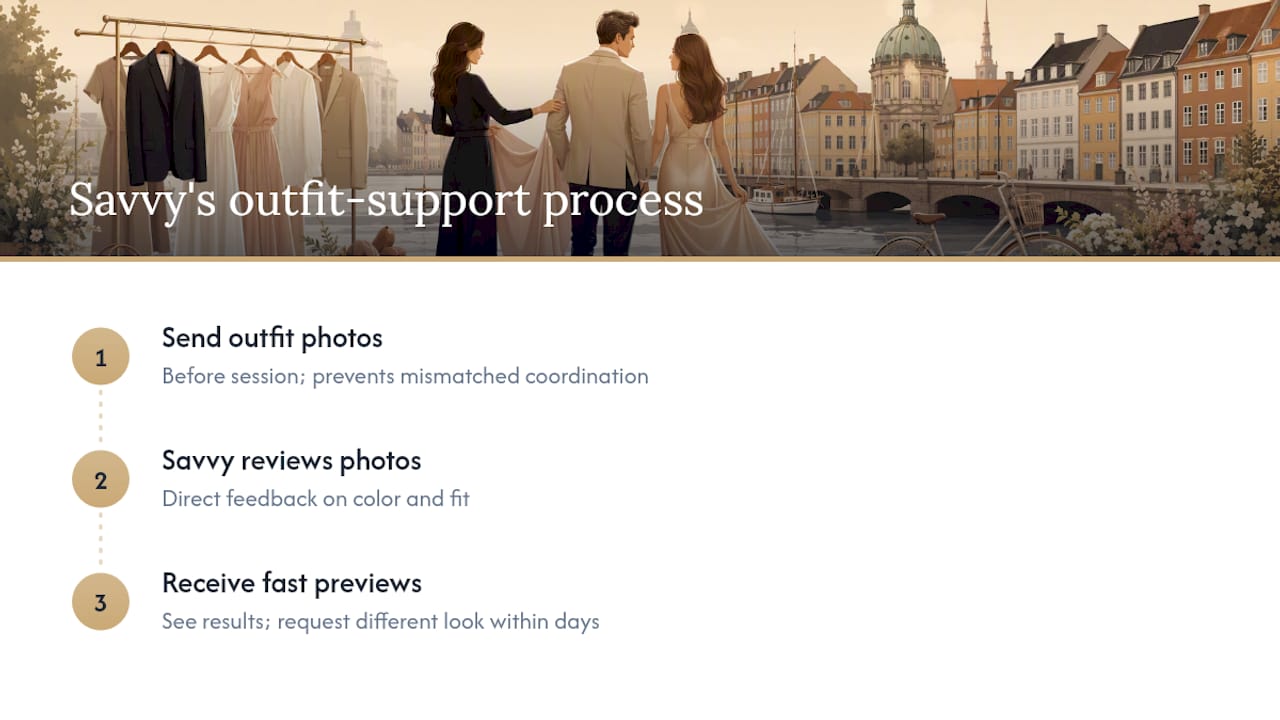
Savvy reviews outfit photos before every session and gives direct feedback on color and fit, no modeling experience required. Sending pictures ahead prevents mismatched coordination on the day, and fast preview turnaround means couples see results, and can request a different look next time, within days.
What Most Outfit Advice Gets Backward
Most guides treat engagement photo outfits like a fashion problem. It’s really a comfort and logistics problem wearing a fashion costume. The couples who end up with stiff, overworked photos usually aren’t the ones who picked the “wrong” colors. They’re the ones who picked a beautiful outfit they’d never actually worn in real life, then spent the whole session distracted by a zipper digging in or shoes they couldn’t walk in.
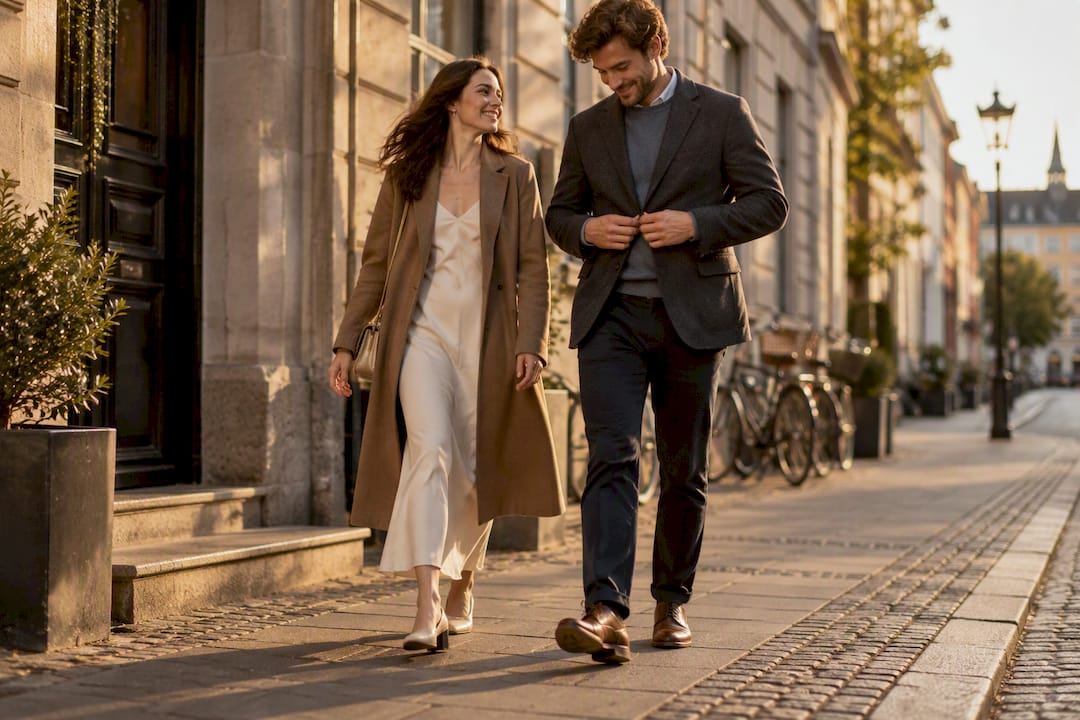
The palette-and-two-outfits rule gets repeated everywhere because it works, but it’s not the part that separates good galleries from great ones. The separator is testing. Walking, sitting, and hugging in the outfit at home, on your own phone camera, catches problems a mirror never will. Skip that step and no amount of color theory saves you.
If you take one thing from this guide, let it be this: comfort isn’t the boring compromise before style. It’s the actual mechanism that makes photos look like you, rather than like two people cosplaying a Pinterest board.
— Savvy
Book a Guided Couples Session in Copenhagen
Some photography sessions offer guided posing, outfit feedback before the shoot, and location selection across photogenic streets and waterfronts, so you’re not left choosing between a wardrobe and a backdrop on your own.
Every couples session is priced at 1000 DKK, includes professional retouching, and comes with a fast gallery turnaround, so you’re not waiting weeks to see how your outfit choices actually photographed. If you’re planning an at-home or backyard shoot instead, the studio’s lifestyle photography sessions follow the same guided, no-experience-needed approach. Check available dates and book your couples session directly on the Shutter Optique site.
Sources
For more outfit inspiration and posing confidence, see couple photoshoot ideas in Copenhagen and how to pose naturally without experience.
- What to Wear for Engagement Photos | The Knot
- Engagement Photo Dresses & Outfits: What to Wear Guide | Bliss & Bone
- What to Wear for Engagement Photos (2026 outfit ideas) | Tov Studio Photo
- What to Wear for Engagement Photos: A Complete Guide | McKinley G. Photography
FAQ
What Colors Work Best for Engagement Photo Outfits?
Soft neutrals, earth tones, and muted jewel tones like sage, terracotta, and dusty blue photograph best because they keep attention on your expressions rather than your clothes, according to Bliss & Bone. Bright neons and stark pure white or black tend to distract or overexpose in strong light.
Should Couples Wear Matching Outfits for Photos?
No, matching outfits in identical colors usually look flat and dated in photos. Coordinating with a shared palette of two or three tones, plus one neutral anchor, creates a cohesive look without the twinning effect.
How Many Outfits Should We Bring to an Engagement Shoot?
Most photographers recommend two outfits, one dressier and one casual, to give the gallery variety without overcomplicating the session. A third outfit is generally only worth packing for longer or multi-location sessions.
When Should We Finalize Our Engagement Photo Outfits?
Plan outfits two to three weeks before the session so there’s time for tailoring, steaming, or replacing a piece that doesn’t work, based on Tov Studio Photo’s recommended timeline. Try everything on together about one week out and take phone photos to catch fit issues early.
How Much Does a Couples Photo Session Cost at Shutter Optique?
A couples session with Shutter Optique is priced at 1000 DKK and includes guided posing, outfit feedback, and professional retouching. Full details are available on the couples photography page.