Couples: A Documentary Wedding Timeline and Shot Checklist

Documentary wedding photography is an observational, storytelling-first approach that captures real, unscripted moments as they happen, rather than staging them for the camera. It suits couples who want a gallery that reads like a memory rather than a series of polished portraits. If you want both, most photographers now offer a hybrid: candid coverage built around a short, planned portrait window.
TL;DR:
- Full wedding galleries should be reviewed to verify the photographer’s true documentary practice and check for consistent storytelling across the entire event.
- A genuine documentary photographer typically maintains a candid-to-directed ratio of around 70 to 80 percent, reflecting mostly natural, unposed moments.
- Building a flexible timeline that prioritizes unstructured time and includes buffers increases the likelihood of capturing authentic, unscripted moments.
- A hybrid approach combining candid coverage with a short, planned portrait session offers a balance of natural storytelling and polished images.
- Asking for detailed full galleries and specific questions about workflow provides better insight into a photographer’s real documentary habits than style labels alone.
Table of Contents
- Defining documentary and photojournalistic wedding photography
- How to recognize a strong documentary wedding photo
- Building a wedding day timeline that lets candid moments happen
- Questions to ask when hiring a documentary wedding photographer
- Shot ideas and a moment checklist for documentary coverage
- When documentary alone isn’t enough: the case for hybrid coverage
- How Savvy at Shutter Optique applies documentary-first principles
- The overrated advice and the one thing that actually matters
- Consider Shutter Optique for your documentary-style coverage
- Sources
- FAQ
Defining documentary and photojournalistic wedding photography
Documentary wedding photography, sometimes called reportage or photojournalistic style, means the photographer observes and records rather than directs. Instead of arranging you into a pose, they wait for the moment: a laugh, a glance, a hand reaching for another. According to Zola’s guide to documentary photography, this is an observational approach that captures real, unscripted events as they unfold rather than staging or posing subjects.

That doesn’t mean zero direction. Most documentary-leaning packages still carve out a small, planned window for formal portraits, typically 15 to 30 minutes, according to the same Zola guide. Outside that window, the photographer steps back.
A few things separate this from traditional coverage:
- The photographer positions themselves to observe, not to arrange.
- Family and couple portraits happen in a short, contained block, not throughout the day.
- The resulting images tend to hold up over time because they show real behavior, not a performance for the lens.
How to recognize a strong documentary wedding photo
Not every candid-looking photo is actually documentary work. A few things separate the real thing from a staged imitation.
- Emotion drives the frame. A strong shot captures a genuine reaction, a decisive split second, not a held expression.
- The angle feels unobtrusive. Over-the-shoulder shots, low angles, and off-center framing suggest the photographer was working around the moment rather than posing for it, a technique detailed by Fstoppers’ guide to wedding photojournalism.
- The gallery tells a sequence. Individual strong photos matter less than whether the full set reads as a narrative from morning to last dance.
- It avoids the “fake documentary” trap. WeddingVenture’s analysis warns that many photographers market themselves as documentary while still directing most of the day; genuine documentary galleries show candid expression throughout and unexpected subjects, while imitations lean on mostly posed, front-on images.
Building a wedding day timeline that lets candid moments happen
A documentary photographer can only capture what the day allows. If every minute is scheduled for a pose, there’s nothing left to observe. Building the timeline around this style means protecting stretches of unstructured time.
- Leave getting-ready time open rather than choreographed, so small interactions between you and your wedding party can unfold naturally.
- Keep the window right after the ceremony and the early reception loose instead of packing them with scheduled photo stops.
- Set aside 20 to 30 minutes specifically for family formals and couple portraits, in line with the 15-to-30-minute window most documentary photographers plan for.
- Let your photographer arrive early enough to scout light and vantage points before guests arrive, a habit Fstoppers ties directly to stronger candid results.
- Seat family members where the photographer has a clear line of sight during the ceremony, and let the processional happen without staged stops.
Pro Tip: Build a five-minute buffer before and after every scheduled block; that’s usually where the best unscripted photos happen.
Questions to ask when hiring a documentary wedding photographer
A portfolio’s highlight reel tells you almost nothing about how a photographer actually works across a full eight-hour day. Use these questions to look deeper.
- Ask for three full wedding galleries, not just highlight reels, so you can judge consistency and pacing across an entire event, a check WeddingVenture recommends specifically to confirm real documentary practice.
- Ask for a candid-to-directed ratio. Photographers who genuinely shoot documentary style often describe their work as roughly 70/30 or 80/20 candid to directed, according to WeddingVenture.
- Ask how they handle family formals. A clear, practiced process for this block signals they’ve thought about protecting the rest of the day for candid work.
- Confirm backup equipment, expected image count, and delivery timeline so there are no surprises after the wedding.
- Look for variety in the angles across their full galleries. Over-the-shoulder framing, low angles, and shots taken mid-motion suggest an unobtrusive shooting style rather than staged reenactment.
Shot ideas and a moment checklist for documentary coverage
A documentary photographer works best with a mental (or literal) list of the moments worth watching for, rather than a shot list of poses. Share this with your photographer or keep it for yourself while planning.
- Prep: dress details and fabric textures, hands tying a tie or fastening jewelry, a candid reaction to seeing the dress for the first time.
- Ceremony: a partner’s face at the first sight of the other, a parent’s expression during the vows, unplanned moments along the aisle.
- Between events: quiet conversations at the edge of the room, a spontaneous embrace, a private glance across a crowded space.
- Reception: toasts mid-laugh, unscripted dance floor movement, table conversations caught in passing.
- Micro-moments: kids exploring the venue, a shared look between grandparents, a hand resting on a shoulder.
When documentary alone isn’t enough: the case for hybrid coverage
Pure documentary coverage has real limits. It rarely produces the polished detail shots (ring close-ups, styled flat lays) or magazine-style couple portraits that some couples still want for prints and albums.
That’s why most working photographers run a hybrid workflow: candid coverage as the default, with a short, planned portrait block layered in.
- A brief, organized session for family formals, run efficiently so it doesn’t eat into candid time.
- A short couple’s portrait window, often paired with golden hour, for a handful of intentional, editorial frames.
- Everything else left open for observation.
The final gallery from a hybrid approach should still feel candid-first: a handful of polished portraits surrounded by a much larger set of unscripted moments.
How Savvy at Shutter Optique applies documentary-first principles
Savvy, the photographer behind Shutter Optique, works from a similar hybrid principle: relaxed, guided direction for clients with no modeling experience, paired with an editorial eye for framing against Copenhagen’s cityscapes. Sessions run on fast turnaround, with professional edits typically delivered within a few weeks. Couples booking couple or wedding coverage can ask to see full galleries and request a candid-to-directed ratio before booking, the same vetting approach recommended earlier in this guide.
The overrated advice and the one thing that actually matters
Most guidance on this topic obsesses over hiring the “right style” of photographer, as if documentary and traditional are fixed categories a photographer either belongs to or doesn’t. In practice, the label matters far less than the photographer’s actual habits: how they use light, how many full galleries they can show you, and how they’ve handled unpredictable moments like a rained-out ceremony or a dim reception hall.

Anticipation matters more than equipment. A photographer who scouts a venue, watches for the split second before a reaction, and shoots through supposedly “dead” transitions, the exact habits Fstoppers outlines, will outperform someone with better gear and no instinct for timing. Garry Winogrand built an entire body of work on that instinct: shooting constantly, from varied angles, staying open to whatever happened next, a practice PBS’s profile of Winogrand credits with shaping how documentary composition is understood today.
If you take one thing from this guide, make it this: ask to see full galleries before you ask about style labels. The label is marketing. The galleries are proof.
— Savvy
Consider Shutter Optique for your documentary-style coverage
If what you want is a gallery that feels like your actual wedding day rather than a performance of it, that’s the kind of session Shutter Optique offers: relaxed guidance for people with no modeling experience, an editorial eye, and quick delivery.
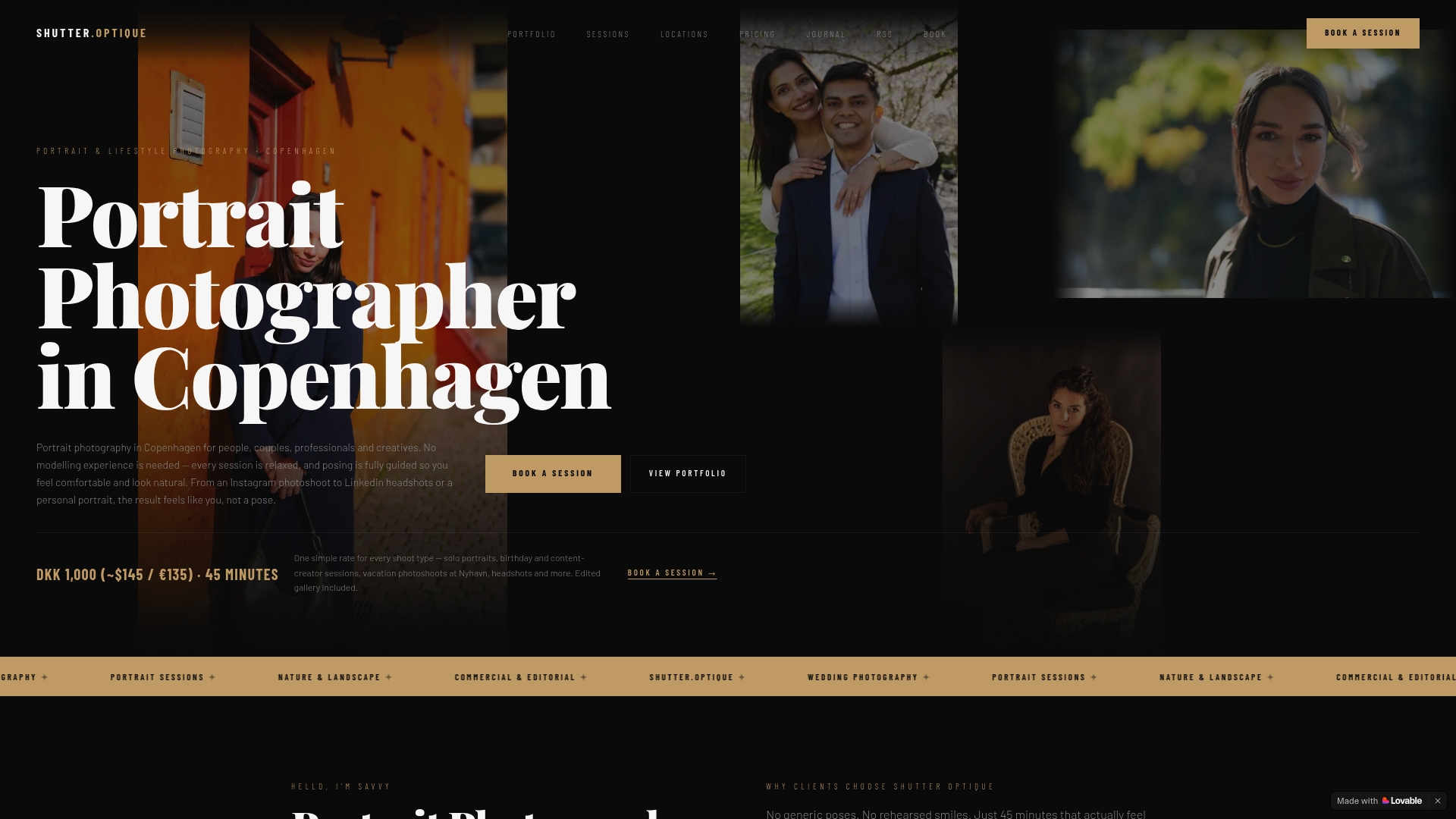
- Visit the main Shutter Optique page for current wedding photography pricing and availability.
- Ask to see full wedding galleries and a candid-to-directed breakdown before booking, the same questions covered earlier in this guide.
- Book a consultation to talk through your timeline and which moments matter most to you.
Sources
- Zola — Guide to documentary wedding photography
- WeddingVenture — Is photojournalism the right wedding photography style?
- Fstoppers — 10 tips and ideas for creative wedding photojournalism
- PBS — Garry Winogrand: All Things are Photographable
FAQ
What makes a good documentary wedding photo?
A strong documentary photo captures a genuine emotional reaction at the right split second, often from an unobtrusive angle like over-the-shoulder or low to the ground. The best ones work as part of a sequence, telling a story across the day rather than standing alone as a single polished shot.
What is the best documentary about photography?
There’s no single official ranking, but Garry Winogrand: All Things Are Photographable is widely recommended for understanding candid, observational composition. Tales by Light is another frequently cited pick for its look at documentary field work and visual storytelling.
What is the best film to use for wedding photography?
This guide focuses on digital documentary technique rather than film stock, so specific film recommendations aren’t covered here; that choice depends on the photographer’s equipment and workflow.
What are some good documentaries about photography to watch for inspiration?
Garry Winogrand: All Things Are Photographable is a strong starting point for understanding the observational, snapshot-driven mindset behind documentary work. Tales by Light is another title often recommended for couples researching visual storytelling before their wedding.
How do I know if a photographer really shoots documentary style?
Ask to see three full wedding galleries rather than highlight reels, and ask directly for their candid-to-directed ratio, often around 70/30 or 80/20 for genuine documentary photographers. Galleries that show mostly posed, front-on images despite a “documentary” label are a sign the style is more marketing than practice.