10 Headshot Poses for Men Photographers Recommend With Lighting Cues

Start with three poses: the three-quarter turn for a confident, professional look, the straight-on relaxed stance for approachable LinkedIn and business photos, and a slight lean-forward for creative or personal branding shots. Each reads differently depending on lighting and camera angle, so the pose is only half the equation.
TL;DR:
- Proper lighting with loop lighting and eye-level camera angles enhances facial structure and reduces unflattering shadows in headshots.
- Small adjustments in expression, chin position, and hand placement significantly improve naturalness and confidence in photos.
- The three-key poses—three-quarter turn, relaxed straight-on, and slight lean-forward—cover most professional and casual headshot needs.
- Wardrobe should feature solid, mid-tone colors with minimal patterns, and grooming must be neat to avoid distractions or exposure issues.
- Guided sessions with professional photographers can streamline pose execution and deliver polished, natural-looking headshots quickly.
Table of Contents
- 1. Ten Poses Worth Trying in Your Next Session
- 2. How to Turn One Pose Professional or Casual
- 3. Lighting and Camera Choices That Make or Break a Pose
- 4. What to Wear for a Flattering Headshot
- 5. Common Posing Mistakes and How to Fix Them
- 6. Getting Hand Placement and Chin Position Right
- 7. Dialing In Confident, Friendly, or Neutral Expressions
- 8. Choosing a Background That Complements Your Pose
- 9. Simple Ways to Look Relaxed Instead of Posed
- 10. A Photographer’s Note on Guiding Clients Through Poses
- 11. Book a Guided Headshot Session with Shutter Optique
- 12. Where to Learn More About Portrait Lighting and Posing
- Sources
- FAQ
1. Ten Poses Worth Trying in Your Next Session
These setups work whether you are directing yourself in front of a tripod or asking a photographer to guide you through them. Each one lists the core cues and the context it suits best.
- Three-quarter turn: rotate your shoulders about 45 degrees from the camera, keep your chin level, and turn your eyes back toward the lens. It fits corporate and LinkedIn headshots and reads as confident without looking stiff.
- Straight-on relaxed: face the camera directly, drop your shoulders, and let your arms hang loose at your sides. Good for approachable, friendly business profiles.
- Slight lean-forward: tilt your torso a few inches toward the lens while keeping your chin forward and down slightly. Works well for creative branding or Instagram-style portraits where energy matters more than formality.
- Arms-crossed stance: cross your arms loosely, keep shoulders relaxed rather than raised, and angle your body slightly away from center. Suits creative fields and personal branding where a bit of attitude reads well.
- Hand-in-pocket: rest one hand casually in a pocket, keep the opposite shoulder slightly forward, and soften your expression. This one flatters a casual profile picture or a travel-and-lifestyle style shot.
- Seated lean: sit with elbows resting on your knees, shoulders angled toward the camera, and chin lifted just enough to avoid a double chin. Common in editorial-style headshots and podcast or speaker bios.
- Over-the-shoulder glance: turn your body away from the camera, then look back over one shoulder. It adds a candid, editorial feel and fits creative portfolios more than corporate use.
- Chin-on-hand: rest your chin lightly on the back of your hand, elbow supported on a surface or your knee. Works for thoughtful, approachable headshots in casual business settings.
- Walking toward camera: step naturally toward the lens mid-stride, letting one arm swing. This suits lifestyle and personal branding photography where movement adds authenticity.
- Classic straight shoulders with soft smile: square your shoulders to the camera, keep your jaw relaxed, and use a closed-mouth or gentle open smile. This is the safest default for a traditional corporate headshot.
For each, keep your expression matched to the setting: a tighter jaw and steadier eyes for professional contexts, a looser jaw and slight eye crinkle for casual ones.
2. How to Turn One Pose Professional or Casual
The same body position can look boardroom-ready or weekend-relaxed depending on small adjustments to expression and wardrobe.
- Tilt your jaw slightly down and forward for a professional look, or let it sit level and relaxed for a casual feel.
- Add eye tension (a touch of a squint) for confidence in corporate shots, and release it for warmth in casual ones.
- Drop your shoulders half an inch to shift any pose from stiff to approachable.
- Keep a jacket buttoned and collar crisp for formal contexts, or remove the jacket and open the collar for a lifestyle feel.
- Glasses and facial hair stay the same across both looks. Just make sure lighting avoids glare on the lenses and trims beard shadow rather than exaggerating it.
3. Lighting and Camera Choices That Make or Break a Pose
Pose selection only works if the lighting and camera setup support it. Three lighting patterns come up constantly in portrait work: loop, broad, and butterfly. Loop lighting creates a small shadow beside the nose and tends to lengthen the face, which makes it a dependable, broadly flattering choice for most headshots, according to NFI’s guide to portrait lighting. Broad lighting widens the appearance of the face and shows up often in corporate headshots, while butterfly lighting emphasizes cheekbones and suits certain face shapes better than others, per the same portrait lighting guide.
Camera position matters just as much as light. Shooting from eye level or slightly above is generally more forgiving on the jawline, and a short telephoto lens keeps facial proportions natural instead of distorting them the way a wide lens can up close.
- Position the key light at a 45 degree angle to create loop shadows without hiding facial structure.
- Shoot from eye level or slightly higher rather than below, which tends to exaggerate a double chin.
- Angle your body a few degrees away from direct light to reduce glare on glasses.
- Watch for under-chin shadows and raise the light source slightly if they appear too heavy.
Pro Tip: If you wear glasses, tilt your head down just a degree or two rather than adjusting the frames. It moves the reflection without changing your pose.
4. What to Wear for a Flattering Headshot
Clothing choices should support your pose, not compete with it.
- Choose a collared shirt or blazer in a solid, mid-tone color for professional headshots, since busy patterns and thin stripes can create distracting moiré on camera.
- Avoid bright white or jet black shirts close to the face, as both can throw off exposure and skin tone.
- Keep grooming simple: trimmed facial hair, matte skin (a light powder helps with shine), and hair styled the way you’d wear it to an actual meeting.
- Bring a backup shirt in case of wrinkles or unexpected weather, and check that any jewelry or watch is understated rather than distracting.
A quick pre-shoot checklist: pressed shirt, tested jacket fit, hair and beard trimmed the day before, and skin free of visible shine.
5. Common Posing Mistakes and How to Fix Them
Stiffness is the most common problem, usually from overthinking the pose. Take a breath, exhale, and let your shoulders drop before each shot rather than holding a fixed stance. A forced smile reads just as easily as a real one, so try laughing quietly or thinking of something genuinely funny right before the shutter clicks.
Double chins often come from camera angle rather than actual weight. Push your chin slightly forward and down, almost like reaching toward the camera, then let your head tilt a touch.
- Relax your hands by holding a jacket lapel, resting them on a knee, or placing one in a pocket instead of leaving them stiff at your sides.
- Reset your posture every few shots rather than holding one position for too long, since fatigue shows on camera.
Pro Tip: If your hands feel awkward, give them a job, holding a coffee cup, adjusting a cuff, or resting on a chair back all work.
6. Getting Hand Placement and Chin Position Right
Hands are one of the biggest giveaways of a posed, uncomfortable photo. Keep them doing something purposeful: resting in a pocket, holding a jacket lapel, or loosely clasped rather than flat and tense. Avoid clenched fists or hands pressed flat against a surface, since both read as rigid on camera.

Chin position affects the entire jawline and neck. Pushing the chin slightly forward and down, rather than pulling it straight back, tends to define the jaw and avoid the compressed look that a straight-back head position can create. A small forward-and-down movement, then a slight tilt to one side, usually looks more natural than holding the head perfectly level and static. Practice this in a mirror before the shoot so it becomes a quick, repeatable adjustment rather than something you have to think through in front of the camera.
7. Dialing In Confident, Friendly, or Neutral Expressions
Expression should match the context more than the pose itself. A confident look usually comes from slightly narrowed eyes, a level chin, and a closed or barely-open mouth, which works well for executive or corporate headshots. A friendly expression calls for a genuine smile that reaches the eyes (a slight crinkle at the corners), relaxed shoulders, and a softer jaw, better suited to approachable business profiles or client-facing roles. A neutral expression sits between the two: relaxed features, a closed mouth, and steady eye contact without tension, often used for professional headshots meant to look calm and reliable rather than overly warm or overly serious.

Switching between these three takes only small adjustments in jaw tension and eye focus, not a completely different pose.
8. Choosing a Background That Complements Your Pose
Background choice should support the pose rather than pull attention from it. A plain, softly out-of-focus backdrop, whether a solid studio color or a blurred outdoor scene, keeps focus on the face and works for most professional and casual headshots alike. Outdoor settings with greenery or urban architecture add texture and personality, particularly for lifestyle or personal branding shots where a bit of context helps tell a story about the subject.
Avoid backgrounds with strong horizontal or vertical lines directly behind the head, since they can look like they are growing out of your shoulders in a photo. Match the background tone to your pose: a formal three-quarter turn generally pairs well with a clean, neutral backdrop, while a relaxed lean-forward or walking pose can handle a busier, more textured setting without looking chaotic.
9. Simple Ways to Look Relaxed Instead of Posed
The fastest way to loosen a stiff pose is a single exhale right before the shutter clicks. It drops the shoulders and softens the face more than any verbal instruction can. Shifting your weight onto one leg rather than standing squarely on both feet also removes tension from the whole upper body.

Small, repeatable movements, like walking a few steps and turning back, or adjusting a jacket cuff between shots, tend to produce more natural expressions than holding one static pose and waiting for the photographer to shoot. Simple adjustments, a few millimeters of chin movement, a slight shoulder drop, one exhale, are high-leverage changes that noticeably improve how natural a photo looks within seconds. Combining a three-quarter body turn with a slight lean-forward toward the camera, paired with a short telephoto lens, keeps engagement high while preserving flattering body proportions.
10. A Photographer’s Note on Guiding Clients Through Poses
I introduce each pose with a quick demonstration, then adjust in small steps rather than asking clients to hold a stiff position. Most people arrive with no modeling experience, and that is completely normal. Expect guidance through every pose, a fast preview after the session, and retouched images delivered within one to two weeks.
— Savvy
11. Book a Guided Headshot Session with Shutter Optique
If you would rather skip the trial and error, a guided session takes care of the posing decisions for you. Such sessions generally include hands-on direction through poses like the ones above, professional retouching, and quick preview turnaround so you are not left guessing how the shots turned out.
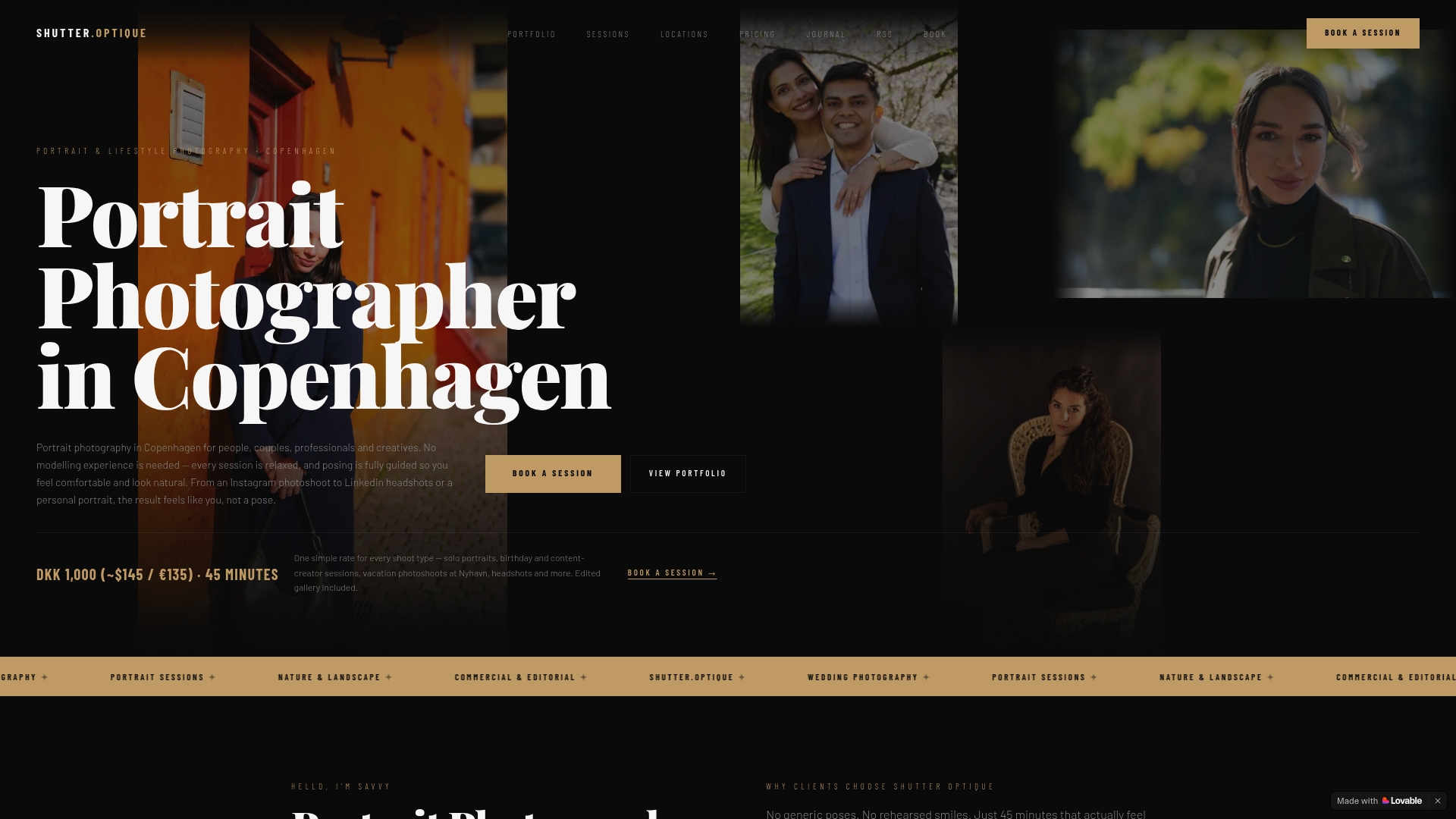
Sessions are relaxed by design, so no prior camera experience is needed, and the Headshots package covers the full process from posing through final delivery. Check availability and book your session directly on the headshots page.
12. Where to Learn More About Portrait Lighting and Posing
For a deeper look at how lighting patterns shape a portrait, see NFI’s portrait lighting breakdown, which pairs each pattern with visual examples.
FAQ
What are the 7 posing points?
There is no single universal list, but common posing checkpoints include head angle, chin position, shoulder line, hand placement, weight distribution, expression, and camera angle. Adjusting each of these individually helps fine-tune a pose rather than trying to fix everything at once.
What should a man wear for a headshot?
A collared shirt or blazer in a solid, mid-tone color photographs best and avoids the moiré effect that busy patterns can cause. Skip stark white or black shirts close to the face, and keep grooming simple with trimmed facial hair and matte skin.
What are the top 5 poses for men?
The three-quarter turn, straight-on relaxed stance, slight lean-forward, hand-in-pocket, and seated lean cover most professional and casual needs. Each pairs differently with lighting and camera angle, so the same pose can look formal or relaxed depending on setup.
What is the most flattering pose for a headshot?
The three-quarter turn tends to be the most broadly flattering, since it defines the jawline and avoids the flattened look of a straight-on shot. Pairing it with loop lighting and an eye-level camera position, as described in NFI’s lighting guide, makes the effect more consistent.
How do I avoid looking stiff in headshot poses?
Take a breath and exhale right before the shot to release shoulder tension, and shift your weight onto one leg instead of standing squarely. Small, repeated movements between shots usually read more naturally than holding one static position.